Why Small Hotels Are Redefining What Conscious Travel Feels Like
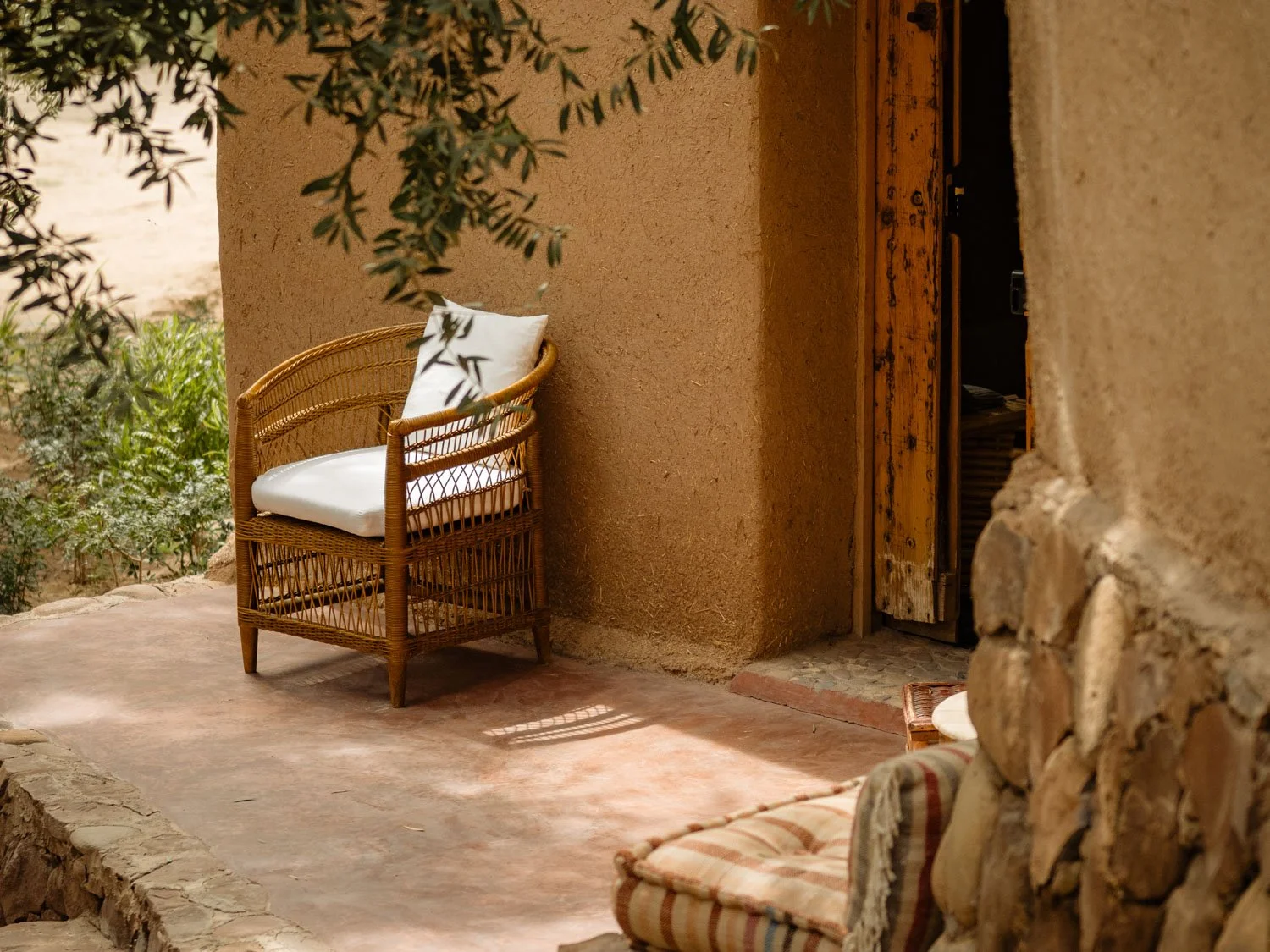
You turn off the main road and the signal fades. The lane narrows, with stone walls on both sides, greenery, or simply open countryside. For a moment, you are not entirely sure you have arrived at the right place.
Then the building appears. Not announced by a sign at a roundabout or a canopy with a uniformed doorman, but simply there, as if it has always been there, which it usually has. For many conscious travelers, this first impression belongs to a broader shift in how travel is experienced.
You stop and notice what remains.
Quiet, but not silent. Birds, wind moving through, sometimes the distant sound of water — a kind of absence that feels intentional rather than designed.
You step out of the car and stand still for a little longer than you normally would.
No one rushes out to meet you. Someone will appear, unhurried, and that lack of urgency is the first thing the hotel offers. The exchange is simple, unperformed.
It is only later that you realize this is not simplicity.
It is a decision.
The difference is intention, not design
Many might argue that small hotels are better designed, and that this is the source of their appeal. It is an easy assumption. Sometimes it is true, often it is not. Design is not the point.
The point is intention, and intention requires an author. Someone making decisions, even the smallest ones, so that a place holds together around a specific way of being. Not necessarily to impress, but to create a coherent atmosphere where nothing feels entirely accidental, even if it appears that way.
The choice to set six tables where eight could fit, the decision to leave a wall unplastered because the stone beneath was worth keeping, the specific variety of citrus in the courtyard, the shade of blue in the tiles, the shelf of books in a corridor that reveals, if you look closely, something about the person behind these choices.
These details exist because one person, or a couple, or a family, had a clear idea of what this place should feel like and made a long series of small decisions toward it. Hotel chains are built to be repeatable. Independent hotels are built to hold a sense of themselves.
Often limited to only a handful of rooms, their scale allows a closer attention to atmosphere, rhythm, and the experience of being there.


What standardization cannot preserve
The opposite is also true. A room built around no one’s particular vision carries no one’s presence. It is not a failure. It is simply what this model produces.
Hotel chains sell consistency, and they deliver it well. Rooms are predictable and functional. A guest in Singapore and a guest in Seville should have the same experience. Everything is calibrated to feel comfortable to most people, which means it is not shaped around a singular point of view. For certain types of travel, this is exactly what is needed.
What gets lost in this process is not comfort. It is evidence — of place, of time, of the people who made decisions about it. This is what chains remove, not by accident, but because anything too specific does not scale well.
In a world where so many experiences are designed to feel interchangeable, places that still carry visible signs of individual decisions feel increasingly rare. Airports, retail spaces, restaurants, and even apartments begin to resemble one another. The same materials, the same lighting, the same neutral vocabulary, built around consistency rather than character.
Small hotels interrupt this continuity.
The uneven floor that tells you it is four hundred years old. The smell of stone in a corridor that has not been smoothed into neutrality. Tiles chosen because someone found them beautiful, not because they were easy to source. A window opening onto something specific: a courtyard, a field, a single tree.
What you lose is not always immediate. It appears later, often around the second morning, when you look out of the window and realize the view could belong anywhere, and nothing around you is asking you to notice where you are.

A hotel that can only exist here
Nothing about independent small hotels is detached from context. Their shape is often the result of what is already there: the land, the building, the limits of what can be changed without losing something essential. A former farmhouse becomes a hotel. A coastal structure adapts to wind, weather, and exposure.
This is different from being locally inspired. Local inspiration is a design choice. Here, the place itself shapes how the hotel exists, which is why small hotels resist replication. Not because they are trying to be unique, but because they emerge from specific conditions.
Materials are often local because they were the most available, or the most practical choice at the time. Layouts follow existing structures rather than idealised ones. Once a place begins to function in this way, those decisions stop being abstract and become part of everyday life, part of how it is lived rather than how it was first imagined.
Because these hotels remain closely tied to their surroundings, the distinction between hospitality and local life becomes more blurred. The people cooking, building, growing, repairing, or guiding are often connected to the same landscape and community that define the experience itself. What sustains the hotel frequently supports the surrounding area as well, as a natural consequence of remaining embedded in place.
The olive oil at breakfast comes from the same landscape you can see from the dining room window, and the person who suggests a walk after dinner knows the path because they have taken it themselves, in every season, and can tell you where it becomes difficult after rain. Even imperfections are inherited rather than designed.
Over time, this produces something that cannot be separated from its location. These are not design gestures. They are conditions. And conditions remain.


How place reshapes attention
Many small hotels exist outside cities because that is where space allows them to function differently, not only physically, but in how they are experienced.
What this also creates is a different relationship to time.
For conscious travelers, moving away from cities is less about isolation than about what becomes possible when external noise is reduced. The idea is often framed as disconnection, but what changes is attention. Fewer interruptions, fewer competing signals, more continuity between what is seen and what is done.
What often emerges is a slower pace, where days respond more to context than to schedule.
Days are not organised around transit, consumption, or constant availability. They follow environmental and social cues instead: light, weather, temperature, and interaction with people who know the place. Silence is not absolute, but it becomes more present, no longer broken by constant activity.
Small hotels often reinforce this rhythm. Efficiency is not the only value shaping how these places functions. Atmosphere matters too. Breakfast extends because no one is trying to turn tables quickly. A conversation continues because there is nowhere else anyone urgently needs to be.
The landscape stops being a backdrop and becomes a reference point that structures movement through the day. Walking becomes about proximity rather than route, about sensing how the body moves through it. Eating responds to appetite rather than schedule. Even rest is no longer planned, but responds to need.
In that shift, place and time stop being separate. They overlap in the way the day is experienced, as conditions that shape each other.
Why identity matters more than novelty
Small, independent hotels tend to attract a more deliberate kind of traveller, one who values depth over frequency.
They travel less, but with greater intention. Where they stay becomes part of that decision, extending beyond the place itself to how it operates, often favouring hotels that remain connected to their local context.
The destination is not a setting, but something to be understood. History, local life, craft, and landscape are approached with curiosity, not as separate elements, but as part of the experience itself. The hotel becomes a way of entering that world more closely.
A certain visual and cultural awareness informs these choices. Design, materiality, and food become visible signals of whether a place holds a clear identity and feels coherent in how it exists.
What brings conscious travelers back is not familiarity, but recognition: the feeling of returning to something that has remained entirely itself.
Are you looking for
More Insider Tips On Sustainable And Conscious Travel?

RELATED CONTENT